






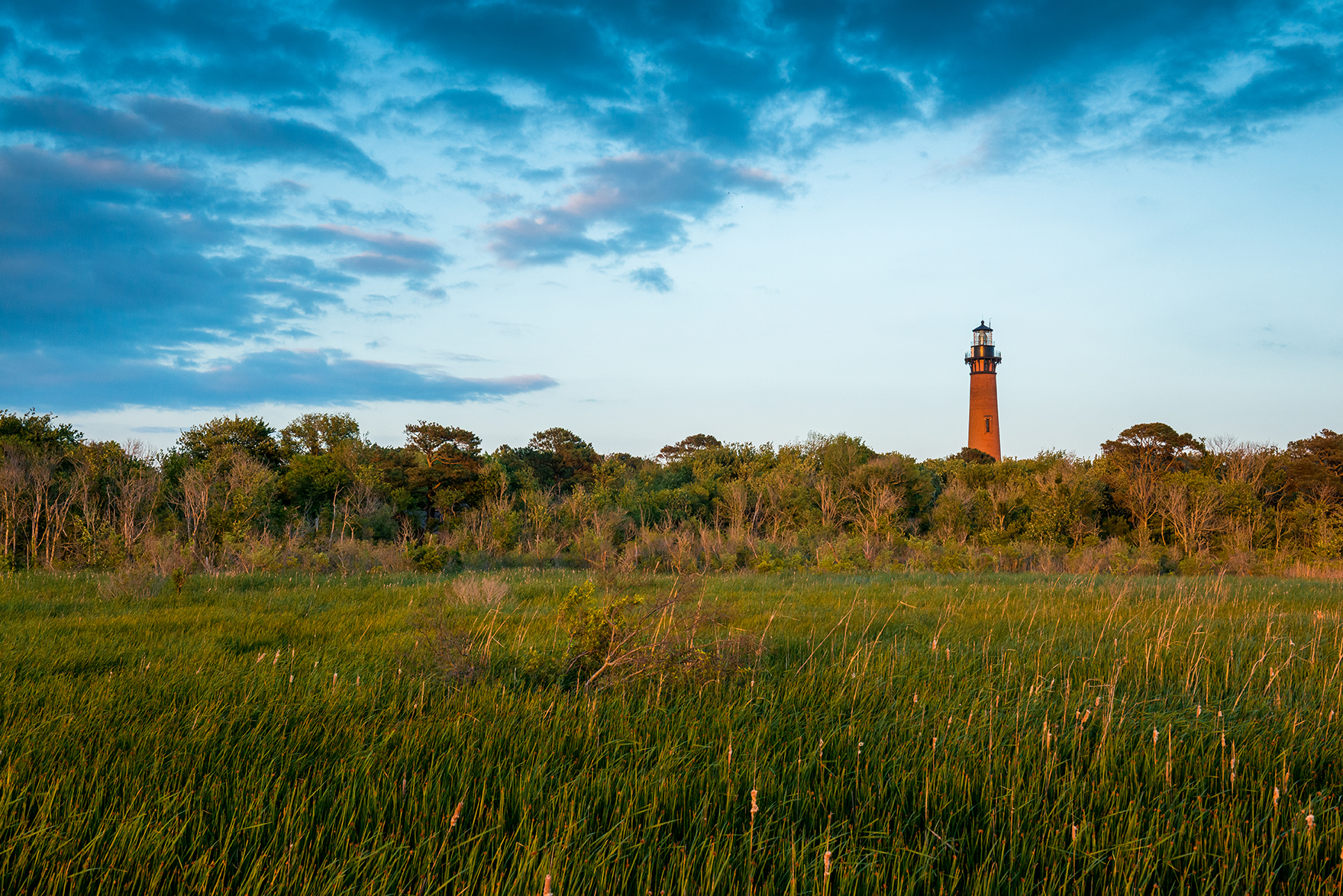
Standing watch for over a century, the Currituck Beach Lighthouse in Corolla, NC, has a rich history. While some facts are clearly observable — the 220 steps, the unpainted red brick exterior and the sweeping views of Currituck Sound and the Atlantic Ocean — other details about this lighthouse are not so widely known. We asked Meghan Agresto, Site Manager and Lighthouse Keeper, to provide some uncommon knowledge and interesting facts about the lighthouse. We’ve also included a few things to look for when you visit, so you can make the most of your climb and time on the grounds.
21. Its Red Brick Exterior Was Intentional
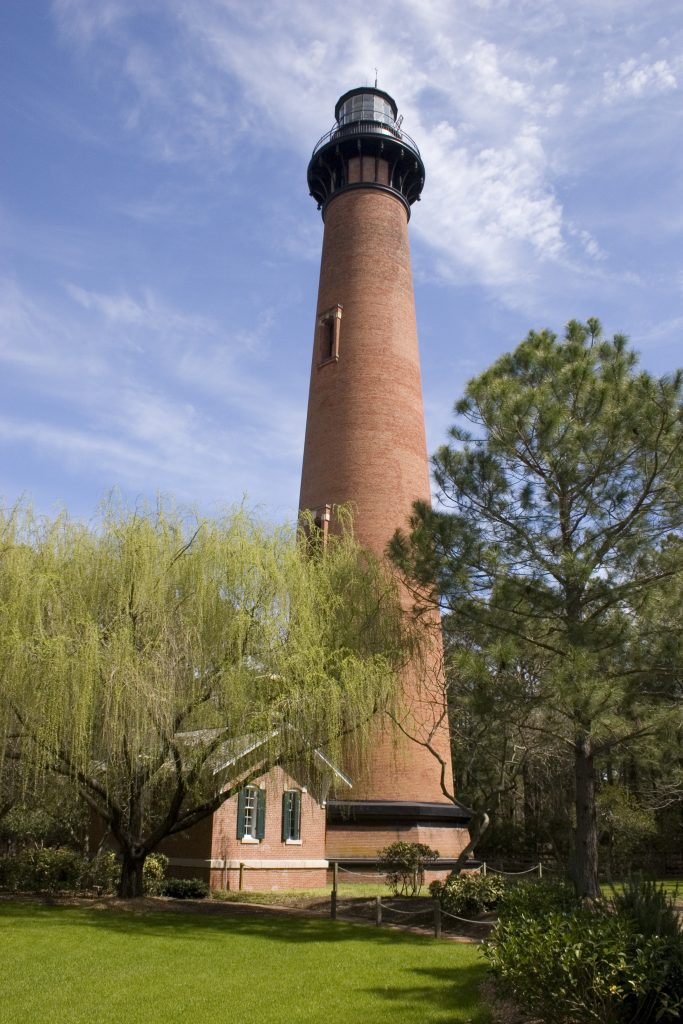
The lighthouse’s unpainted red brick exterior was intentional. As the last brick-and-mortar lighthouse built in North Carolina, the tower’s natural red brick served as a day marker, helping mariners distinguish it from other coastal lighthouses before the light came on at dusk.
20. The Lens Had Ruby-Red Flash Panels
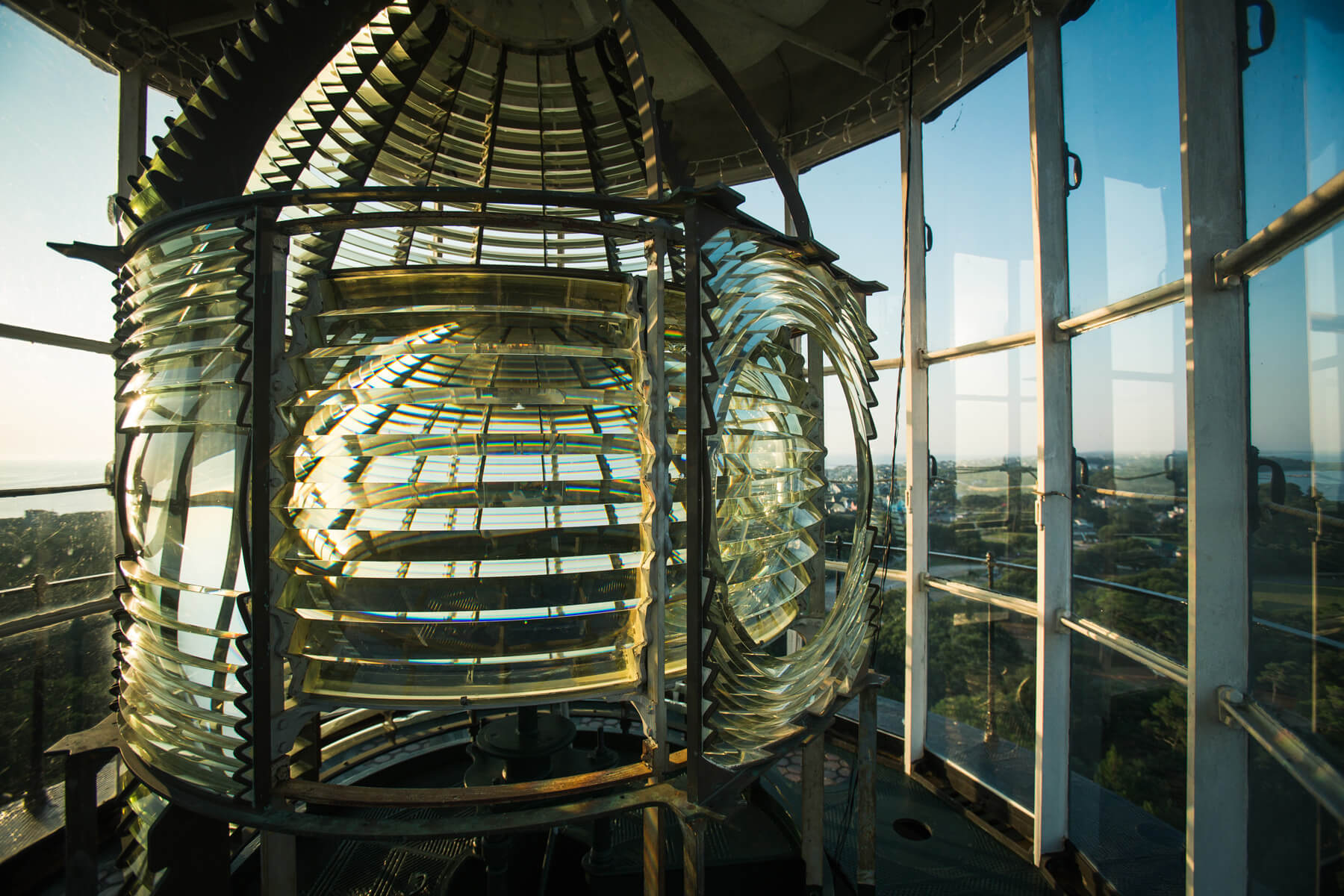
Between 1875 and 1933, while the lighthouse was oil-burning, three flash panels covered with ruby-red glass were used on the enormous, first-order Fresnel lens to create a unique flash pattern. This let mariners know where they were so that they wouldn’t come in too close.
19. The Lighthouse Weighs 6.4 Million Pounds
The Currituck Beach Lighthouse weighs 3,200 tons, or 6,400,000 pounds. That incredible weight is part of what makes the tower such an impressive piece of coastal engineering.
18. The Y-Shaped Path Had a Practical Purpose
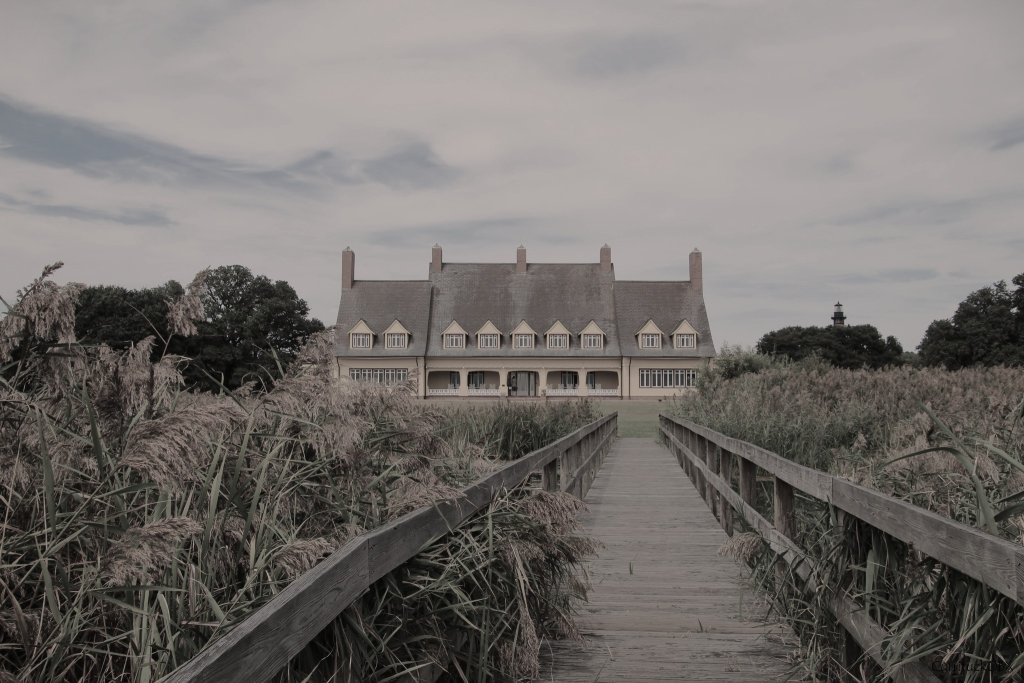
The big Y-shaped path in front of the lighthouse divides the site so that each side of the house has its own walkway to the lighthouse. It’s one of those small details that may be easy to overlook, but it reflects how the light station was designed for daily use by the keepers and their families.
17. The Original Land Was Later Used for Muskrat Research
The original parcel of federally owned land on which the lighthouse sits stretched from the Currituck Sound to the Atlantic Ocean. In the 1950s, that land was transferred to the State of North Carolina to be used for muskrat research.
16. One Assistant Keeper Served for 36 Years
One former assistant lighthouse keeper, William Riley Austin, served for 36 years. That’s more than half the time the lighthouse burned oil for light, which means the light only used an oil lamp for 18 years without his help.
15. The Lighthouse Once Burned Lard for Fuel
The first fuel used for the lighthouse was lard. It remained in use for about 10 years before the light was switched to kerosene, also known as “mineral oil.”
14. Corolla Wild Horses Were Once Found on Site
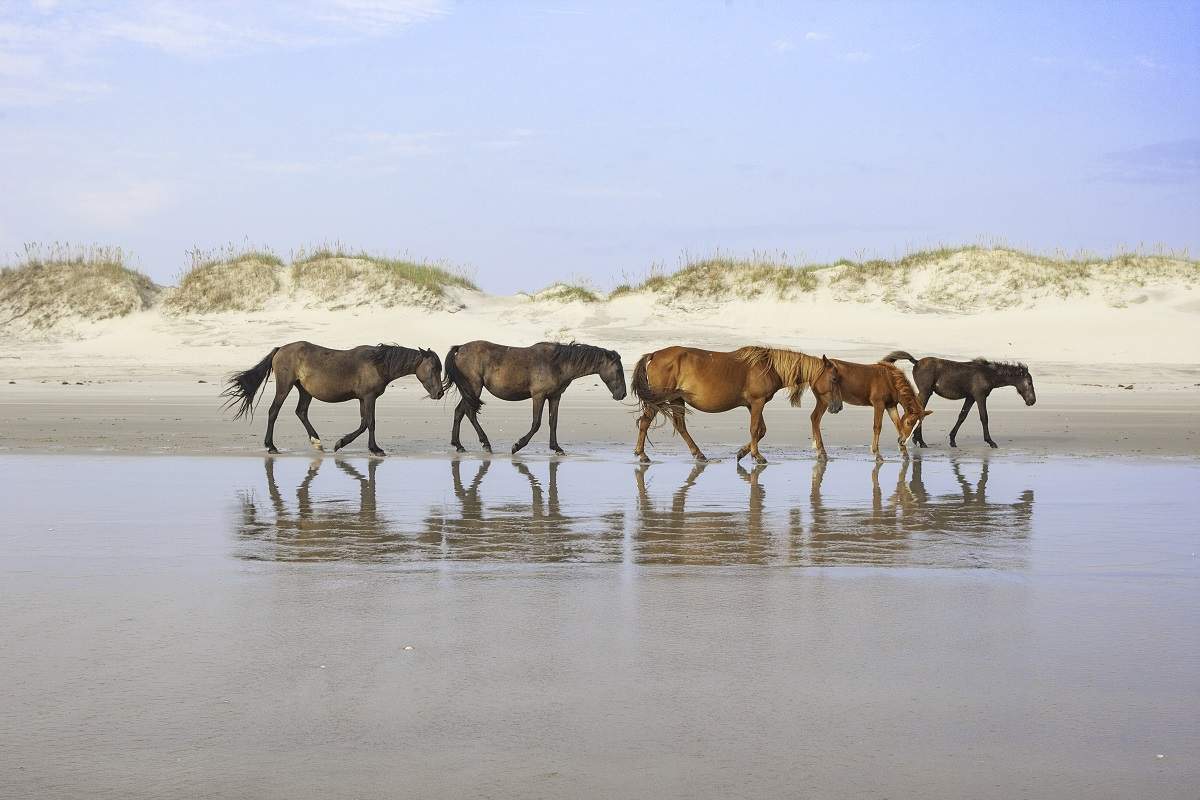
Until recent years, it was not unusual for lighthouse keepers to find Corolla wild horses on site. The detail connects the lighthouse to one of the most beloved parts of the Northern Outer Banks.
13. The Small Keeper’s Dwelling Arrived by Barge
The small Keeper’s Dwelling was not originally built on site. Instead, it arrived on a barge in 1920 after crossing the shallow Currituck Sound.
12. The Keeper’s House Once Sheltered 76 Shipwreck Survivors
The Keeper’s House was host to 76 survivors of the Metropolis wreck of 1878. That’s a lot of people, even for what seems like a big house.
11. An Earthquake Once Shook the Lighthouse Lens
The famous Charleston, South Carolina earthquake in 1886 was felt by keepers at the top of the Currituck Beach Lighthouse. The shock caused the lens to rattle and suspended objects to swing.
10. A Schoolhouse Was Built for Lighthouse Keepers’ Children
The local one-room schoolhouse was built in the late 1890s for the lighthouse keepers’ children. In 2012, it was reopened as North Carolina’s smallest charter school.
9. Only One Other Light Station Was Truly Identical
The only totally identical site to the Currituck Beach Light Station is Morris Island Light Station in South Carolina. Today, that site is surrounded by water and has only part of the original lighthouse remaining.
8. Its Keeper’s Dwelling Had Three Matching Counterparts
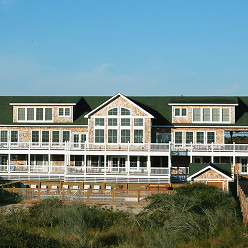
Identical Keepers’ Dwellings were built at three other light stations: Morris Island and Hunting Island in South Carolina and Piedras Blancas in California. None of those other three dwellings still exist today.
7. A Tragic Night Helped Push the Lighthouse Forward
In 1852, eight vessels went ashore in one evening on Currituck Beach. This helped convince Congress to appropriate money for the Currituck Beach Lighthouse in 1854, and a lens was made in France for the tower. Unfortunately, the lighthouse wasn’t actually built until the 1870s, so the Currituck lens was sent to Key West and the funding for the Currituck Lighthouse was eventually used to build the second Bodie Island Lighthouse.
6. The Lighthouse Was Featured at the 1876 Centennial Exhibition
Currituck Beach Lighthouse’s “graphic representation” was featured at the 1876 Centennial Exhibition in Philadelphia. The recently built “first-order” lighthouse, named for its first-order Fresnel lens, and its dwelling were a source of pride for a 100-year-old nation.
5. The Lighthouse Is Privately Preserved
The Currituck Beach Lighthouse is privately owned and preserved by Outer Banks Conservationists, Inc., a private nonprofit organization. OBC began restoration work on the tower in 1990, and the deed for the lighthouse was transferred to the organization in 2003.
4. It Shares Plans With Several Other Lighthouses
The Currituck Beach Lighthouse was built from the same plans as the St. Augustine Lighthouse, the Bodie Island Lighthouse and the Morris Island Lighthouse. It is also almost identical to the Sand Island Lighthouse in Alabama, which is one story shorter.
3. Life at the Lighthouse Wasn’t Always Peaceful
The quiet, romantic, oceanside life wasn’t always a happy one. Assistant Keeper Horatio Heath was accused of poisoning another keeper’s dog in 1878, soon after the tower was built. One keeper also had two children die while living on site; one from pneumonia at age 1 and one from drowning in Virginia Beach at age 15.
2. The Last Bureau Keeper Had a Famous Connection
The last keeper of the Currituck Beach Lighthouse who worked as an employee of the Bureau of Lighthouses was Bill Tate. He is also credited with bringing the Wright Brothers to Kitty Hawk.
1. The Keeper Tradition Continues Today
The tradition of on-site lighthouse keepers continues. Today, on-site keepers and staff care for the lens, maintain the structure and grounds, and share the site’s history with visitors.
Planning Your Visit
Now that you know what makes this lighthouse so remarkable, come see it for yourself. Site Manager Meghan Agresti recommends giving yourself plenty of time — not just for the 220-step climb, but for the exhibits, the grounds, and the keepers’ house, all of which bring the history to life in ways the facts alone can’t capture.
The Currituck Beach Lighthouse and Museum Shop are open daily from 9 a.m. to 5 p.m., March 21 through November 30, weather permitting. Admission to climb is $13 for ages 4 and up and is paid at the front of the lighthouse. Admission to the grounds and museum shop is free, and parking is also free.
Check out this video for more information about the lighthouse and other nearby attractions at Historic Corolla.