










Corolla in the 1920s: A Different World
Picture Corolla in 1922. The Currituck Beach Lighthouse was there, along with a United States Coast Guard Life-Saving Station, a one-room schoolhouse, a post office, a few stores and a small population of residents.
There were no paved roads or modern amenities. Electricity wouldn’t reach the community until 1955.
What this area did have was waterfowl — and plenty of it. Canada geese, mallards, black ducks and other waterfowl species made Currituck Sound a popular destination for hunters and wealthy outdoor enthusiasts.
Among them was a couple whose love of the outdoors would leave a lasting mark on the Northern Outer Banks.
The Knights Come to Corolla

Edward Collings Knight Jr. and his wife, Marie Louise, shared a passion for waterfowl hunting. But there was one problem: in those days, women generally weren’t welcomed in the exclusive, all-male hunting clubs.
According to local tradition, Mr. Knight’s answer was to build a grand private retreat where he and his wife could enjoy their favorite pastime together.
After discovering this hidden gem in the Outer Banks, Mr. Knight purchased the former Lighthouse Hunt Club and a large tract of land along Currituck Sound.
The couple envisioned a luxurious winter home where they could hunt, relax and entertain friends and family. Construction began in 1922, and their 21,000-square-foot residence was completed in 1925.
Originally named Corolla Island, the property would become one of the most distinctive homes on the Northern Outer Banks.
Whalehead’s Remarkable Architecture and Design

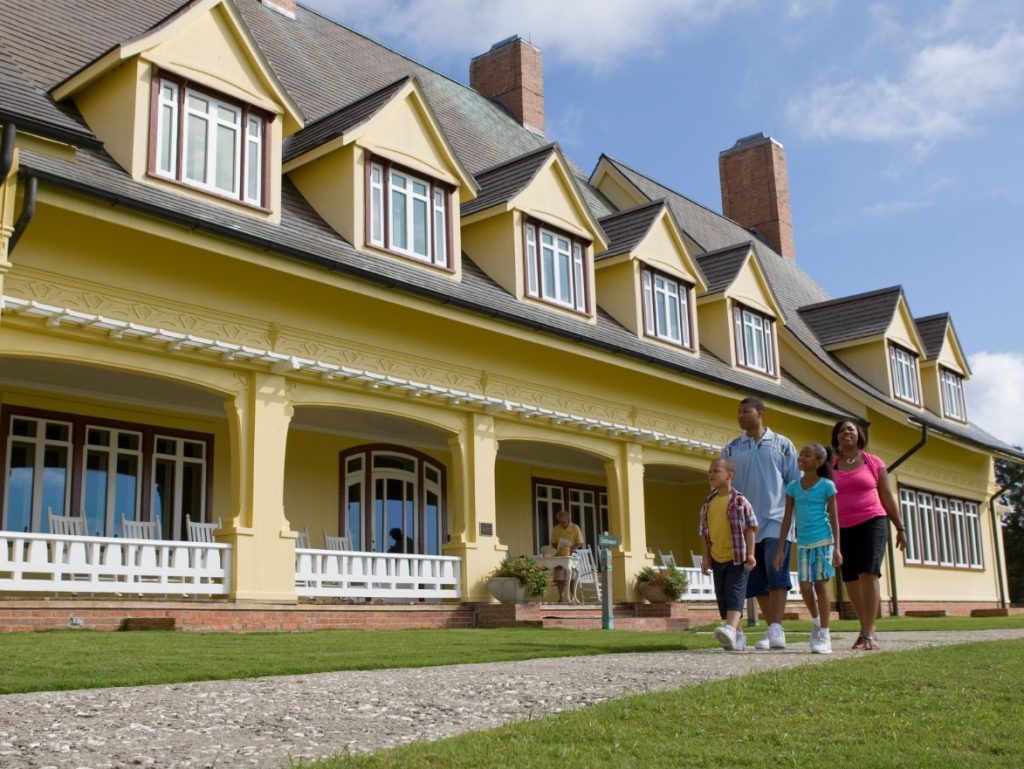
Whalehead was years ahead of its time. Combining Art Nouveau, Pennsylvania farmhouse and Arts and Crafts influences, the retreat featured striking architectural details and modern conveniences rarely found in Corolla during the 1920s.
Some of its most remarkable features include:
A copper-shingled roof and five chimneys that give the mansion its distinctive appearance.
18-inch-thick walls reinforced with steel beams, along with humidity-resistant cork floors.
Electricity, running hot and cold water, indoor bathrooms and even a refrigerator, at a time when most of Corolla lacked these conveniences.
Elegant interiors featuring Tiffany lighting, Mrs. Knight’s Steinway piano and an Otis elevator, many of which can still be seen today.
With its sweeping rooflines, decorative details inspired by nature and distinctive porches, Whalehead remains a remarkable example of early 20th-century architecture.
From Private Retreat to Historic Landmark
Whalehead’s story didn’t end with the Knights.
New owners eventually renamed the property the Whalehead Club. During World War II, the estate was leased to the U.S. Coast Guard. In the decades that followed, it served several different purposes, including a boys’ school and a research facility associated with rocket fuel testing.
After years of changing ownership and use, the once-grand property eventually fell into disrepair.
In 1992, Currituck County purchased Whalehead to preserve this important piece of local history and protect public access to Currituck Sound.
Restoration began in 1999. By 2002, the estate had been carefully restored to reflect its original 1920s appearance, bringing new life to its distinctive architecture, furnishings and historic character.
Today, Whalehead is listed on the National Register of Historic Places and welcomes visitors to explore its remarkable past.
A Closer Look at Whalehead’s History
Want to see what makes Whalehead so special? Go behind the scenes with Whalehead curator Jill Landen in the Northern Outer Banks’ Historic Origins series. Discover the stories, original features and preservation efforts that keep this historic landmark’s legacy alive.
The Mysteries and Ghost Stories of Whalehead
Like a great adventure tale, this architectural treasure’s past includes mystery, romance and intrigue.
And if you believe in ghosts, Whalehead has a few stories that might interest you. Over the years, visitors and staff have reported unusual sounds, unexplained footsteps and even the scent of cigar smoke. Some local legends suggest that Mr. Knight himself may still be keeping an eye on his former home.
Whether you’re a believer or a skeptic, these stories add another intriguing chapter to Whalehead’s history.
Curious about the mansion’s mysterious side? Read more about the ghosts of Whalehead and the legends surrounding this historic Corolla landmark.
Experience Whalehead in Historic Corolla Today
The best way to appreciate Whalehead’s remarkable history? Come see it for yourself!
Tour the restored mansion, wander through its historic rooms and discover how the Knights lived nearly a century ago. From its striking architecture to its original furnishings, there’s plenty to explore inside this one-of-a-kind Corolla landmark.
Outside, the estate sits within Historic Corolla Park, surrounded by scenic grounds overlooking Currituck Sound. It’s also a popular setting for weddings, family photographs and community events.
Want to discover even more about this one-of-a-kind Corolla landmark? Check out 23 Things You Might Not Know About Whalehead for more fascinating facts and stories about the historic estate.
Frequently Asked Questions About Whalehead
Why was Whalehead originally called Corolla Island?
The Knights named their estate Corolla Island after canals and a boat basin were dredged around the property, creating an island-like setting. The name was later changed to the Whalehead Club by a subsequent owner, Ray T. Adams.
How much of Whalehead’s original property remains today?
The Knights’ original property covered approximately 2,200 acres, stretching from Currituck Sound toward the Atlantic Ocean. Today, the historic mansion sits on roughly 39 acres within Historic Corolla Park, preserving a small but significant piece of the original estate.
Are any of Whalehead’s original furnishings still inside the mansion?
Yes! Several original furnishings and architectural details remain, including Tiffany lighting and Mrs. Knight’s Steinway piano. Six original pieces of furniture have remained with the house, while other furnishings have been returned, purchased or loaned to help recreate its 1920s appearance.
Can you explore Whalehead’s grounds without taking a tour?
Yes! Historic Corolla Park is free and open to the public, so visitors can enjoy the grounds surrounding Whalehead without booking a mansion tour. Exploring the restored home’s interior requires museum admission.
What other historic attractions are near Whalehead in Corolla?
Whalehead is within walking distance of several other attractions in Historic Corolla Park, including the Currituck Beach Lighthouse, Currituck Maritime Museum and Outer Banks Center for Wildlife Education. Together, these attractions offer a fascinating look at the region’s maritime history, wildlife and coastal heritage.
Does Whalehead offer special tours beyond regular museum visits?
Yes! In addition to regular museum tours, Whalehead offers seasonal experiences such as Legends, Lore and Ghost Tours and holiday candlelight tours. These special events offer different ways to discover the mansion’s history and traditions. Check the Whalehead tours and events page for current offerings and reservations.