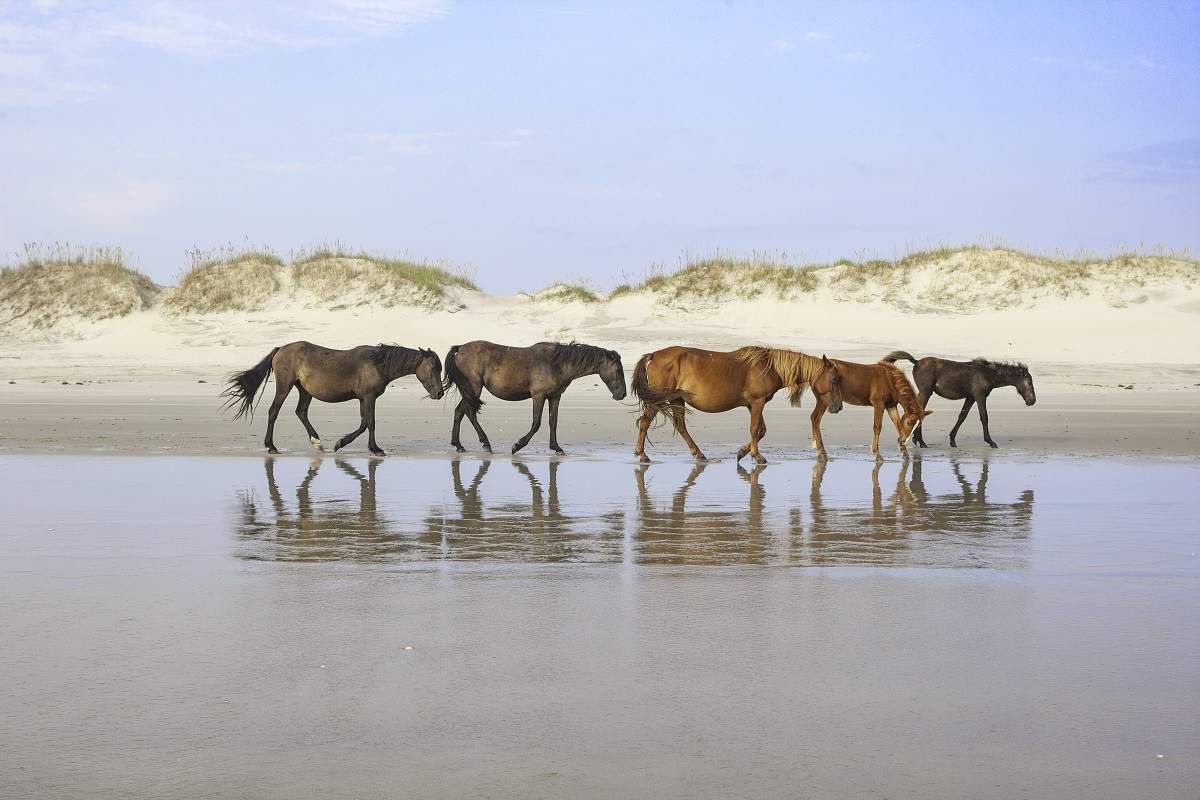







When winter arrives in the Northern Outer Banks, Corolla takes on a quieter kind of beauty. The beaches become peaceful, the air turns crisp, and our famous wild horses trade their sleek summer coats for warm, fuzzy winter ones. For visitors who love the Corolla wild horses, seeing temperatures drop—or watching a coastal storm roll through—can naturally bring questions. Are the horses warm enough? Where do they go when it rains? What happens when winter weather arrives?
The reassuring answer is that winter is nothing new for these remarkable horses.
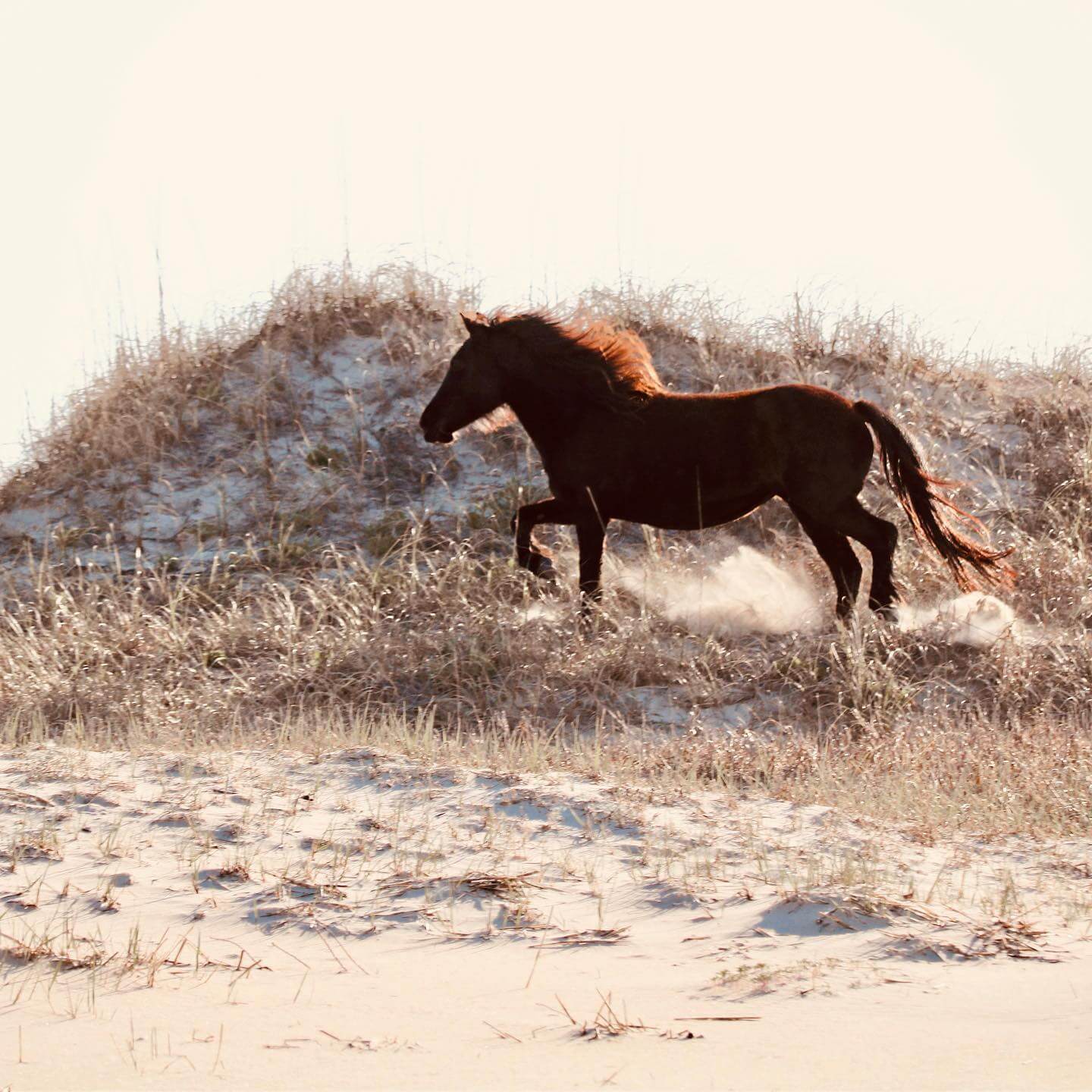
At Home in the Wild
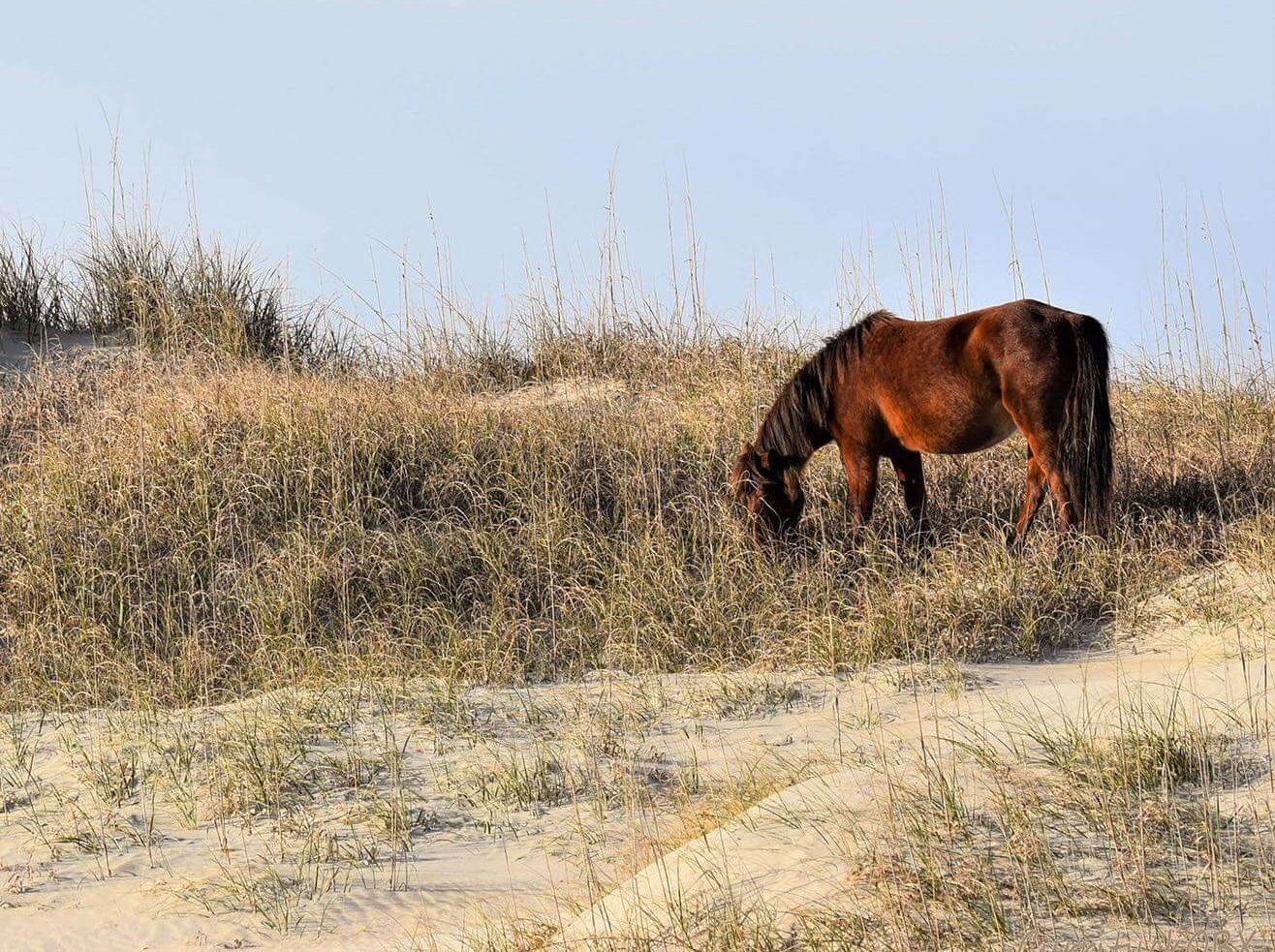
The Corolla wild horses have lived on the Northern Outer Banks for generations, adapting to the changing seasons and the unique conditions of their barrier-island home. They know their territory remarkably well—from the beaches and dunes to maritime forests, marshes and protected areas farther inland. During winter, visitors may notice that the horses aren’t as easy to spot along the beach. That doesn’t mean they’ve gone anywhere. They may simply be spending more time in interior areas where they can find food and protection from the elements.
The Corolla Wild Horse Fund has documented horses gathering in remote freshwater marshes during winter, where grasses remain available. Their knowledge of these places is part of what makes a truly wild herd so fascinating.
Built for Cooler Weather
As the days grow shorter, the horses begin growing their winter coats. Those thick, shaggy coats provide natural insulation against cold temperatures and coastal winds. They also spend plenty of time doing what horses do best… grazing and foraging. Eating and digesting forage helps horses generate body heat, giving them another natural way to stay comfortable when temperatures fall. Rain, wind and even an occasional snowfall are all conditions these hardy Bankers are equipped to handle. During challenging weather, they rely on instinct and their familiarity with the landscape to find more protected areas.
How Visitors Can Help
One of the best things we can do for Corolla’s wild horses—winter, spring, summer or fall—is allow them to remain wild. If you’re fortunate enough to encounter horses during your winter visit, enjoy the moment from a respectful distance. Stay at least 50 feet away, never approach or touch them, and never offer food. Their digestive systems are adapted to the native plants and grasses found in their habitat and feeding them human food can make them dangerously ill. Think of yourself as a guest in their home: watch, photograph and appreciate, but allow the horses to decide where they want to go and what they want to do.
Discover Corolla’s Quieter Season
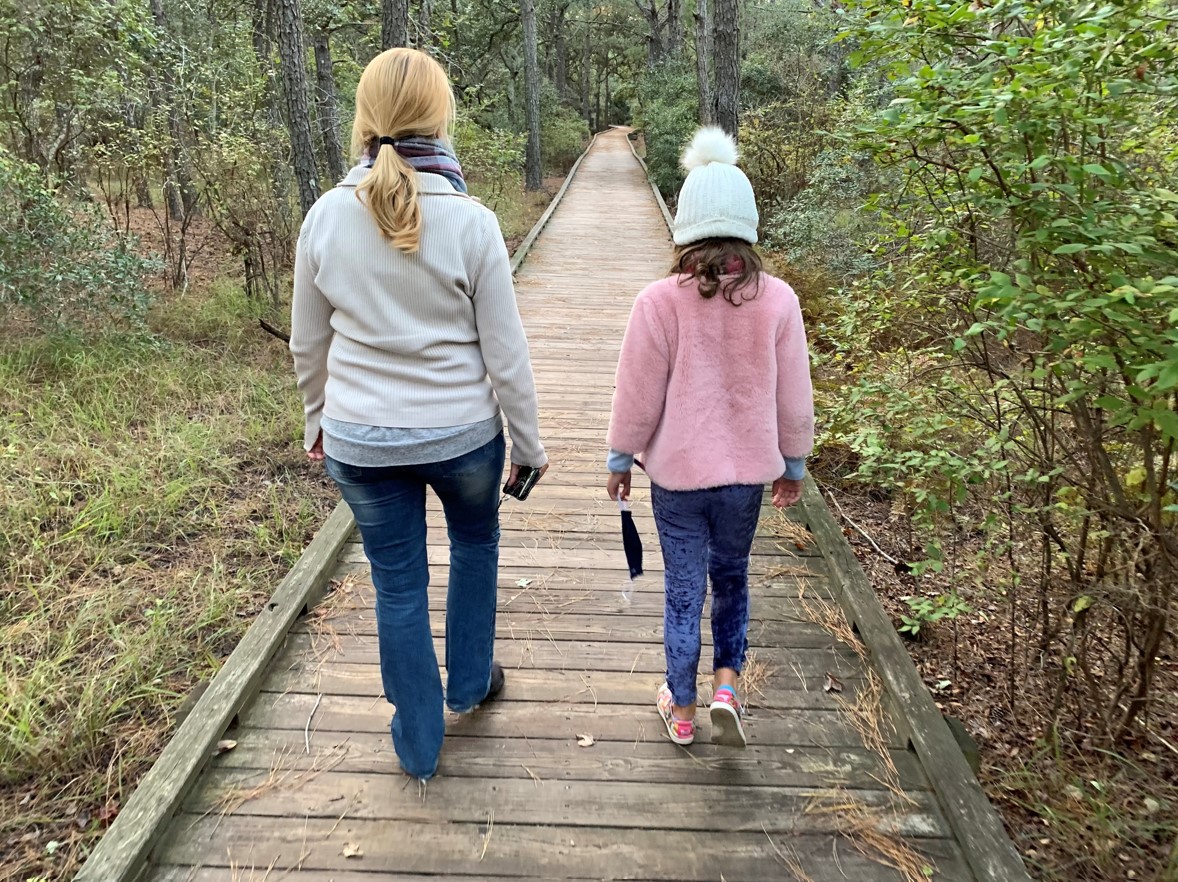
Winter can be a wonderful time to experience the Northern Outer Banks. There are fewer crowds, miles of peaceful shoreline to explore and a different rhythm to the landscape. Bundle up for a beach walk, watch for winter birds and wildlife, explore Historic Corolla, or take a wild horse tour (book early as many of the tours are seasonal).
And if you’re lucky enough to spot a group of shaggy Banker horses against the winter dunes, take a moment to simply enjoy the sight knowing… They are right where they belong.
Come discover the wild beauty of Corolla this winter—where the beaches are quieter, nature takes center stage, and our legendary horses remain wild and free.