







Flying from distances as far away as the Arctic, the migratory bird species that make their winter home in Currituck County, North Carolina attract birding enthusiasts and ornithology hobbyists nationwide. Spend the off-season in Corolla and the Northern Outer Banks, and you’ll find quieter beaches, coastal nature trails, and protected wetland habitats where wintering birds settle in.
Bring a comfortable pair of walking shoes, your camera, and binoculars to watch for Tundra Swans, Snow Geese, American Bald Eagles, and other waterfowl species that make the cooler months so rewarding for coastal wildlife observation.
Winter Birding at Mackay Island National Wildlife Refuge
If you’ve ever wanted to see elegant tundra swans, snow geese, and majestic American bald eagles in their natural barrier island ecosystem, make sure to add Mackay Island National Wildlife Refuge to your beach vacation bucket list. December and January mark a peak time for migratory waterfowl at Mackay Island, which is a vital stopover on the Atlantic Flyway.
The marshes and estuarine wetlands within the refuge become a hub for thousands of birds, including mallards, American black ducks, American widgeons, green-winged teals, gadwalls, and northern pintails.
“Mackay Island is a key stopover habitat and wintering grounds for a lot of birds,” said Mike Hoff, refuge manager.
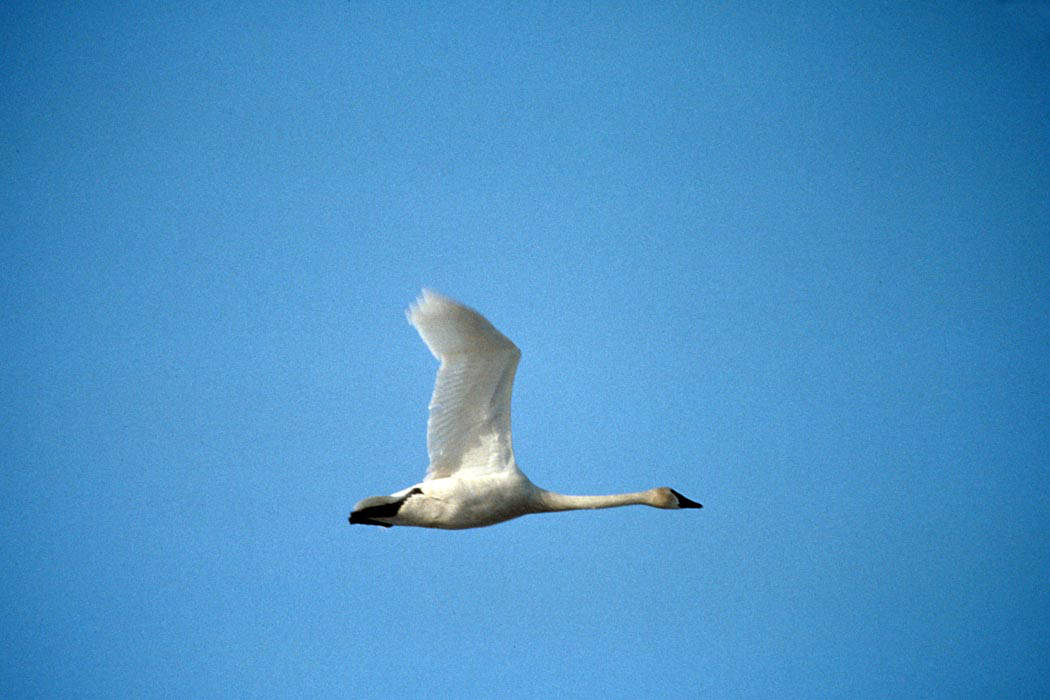
A Tundra Swan in flight
It’s no wonder Currituck County is one of the top North Carolina bird-watching destinations. Mackay Island National Wildlife Refuge has been a safe haven for protected avian species for more than 55 years. Located on Knotts Island along the North Landing River, the refuge spans roughly 8,500 acres. From mid-March to mid-October, visitors have access to hiking and biking trails. Depending on the season, recreational fishing for largemouth bass, crappie, and bluegills is permitted.
If you drop a line from the bridge on the marsh causeway that leads to the refuge, you might catch red drum, striped bass, and flounder.
During the winter, access to the refuge is limited but visitors can still hike a one-mile public road that leads to the front gate. This protects the habitat while still providing the public an opportunity to witness the thousands of ducks, geese, and swans that winter here.
“The swans are the best-behaved,” Hoff said. “They will sit there and let people take pictures.”
How to Visit Mackay Island in Winter
Before you go, check current trail access and the Knotts Island ferry schedule. Visitors can reach the refuge from Virginia Beach by following Princess Anne Road until it becomes NC Route 615, or from North Carolina by taking the Knotts Island ferry from Currituck Courthouse on US Highway 168. If you plan to use the ferry, call 1-800-BY-FERRY to confirm the daily schedule.
When open, areas such as the Great Marsh Loop Trail, Kuralt Trail Overlook, and Marsh Causeway give birders more places to watch the marshes and wetlands.
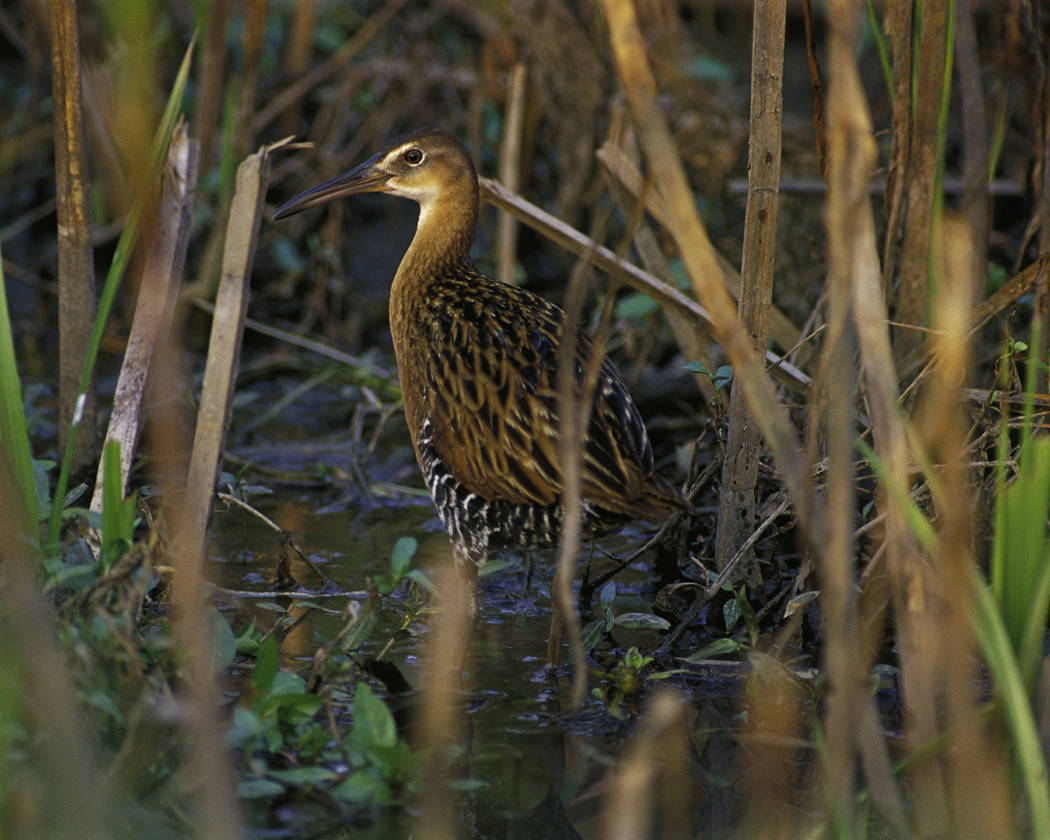
The elusive King Rail
Where to Spot the Elusive King Rail
Perhaps the biggest draw for serious birders at Mackay Island National Wildlife Refuge is a chance to spot the secretive King Rail (Rallus elegans). Renowned for its population of King Rails, the refuge has the highest nesting density ever recorded of this species, according to recent wildlife conservation studies.
“The most unique thing about Mackay Island is the King Rail population that we have here,” Hoff said.
Although adult King Rails are about the size of a small chicken, it’s rare to see them. “They’re pretty sneaky,” Hoff said. “They’d rather run than fly. They’ll dart in between places that are skinny.”
A successful strategy for spotting marsh birds like the King Rail is to visit during low tide in the morning hours. These birds frequent the mud flats to forage for crayfish, using their long, slender beaks to extract prey.
More Coastal Birding Spots Near Corolla, NC
For those seeking barrier island birding closer to the coast, the Northern Outer Banks offers diverse environments ranging from maritime forests to tidal marshes.
Audubon Sanctuary and Center at Pine Island
Closer to the beaches, the Audubon Sanctuary and Center at Pine Island offers walking trails over 2,600 acres of lush marsh and forest bordering Currituck Sound. This soundside habitat is one of the area’s most scenic places for bird watching near Corolla, with more than 170 species of birds spotted over the years. Keep an eye out for ospreys, egrets, swallows, loons and other migratory birds.
Currituck Estuarine Reserve
Within Corolla, there are more opportunities to bird watch at the Currituck Estuarine Reserve, which is part of the N.C. Coastal Reserve and National Estuarine Research Reserve. Accessible boardwalk trails take visitors into more than 900 acres of coastal marsh, ocean beach and maritime forest where many birds nest and feed.
Responsible Birding in Currituck
To protect the fragile barrier island ecosystem, all visitors to Mackay Island and other North Carolina wildlife areas are encouraged to follow these Leave No Trace principles:
Take nothing with you but pictures and great memories.
Please do not remove any plants, flowers, stones or other parts of the refuge. Leave nothing behind. Please do not litter. Do not leave leftover food to decompose. Take trash with you. There are no designated trash cans.
Skip skipping rocks.
It might not seem like a big deal to skip rocks in the refuge, but it has long-term consequences. When people constantly pick up rocks and throw them, it changes the soil composition at the bottom of the pond. This, in turn, affects the fish, mussels, and wildlife that live there.
Don’t disturb the wildlife.
Any form of disturbance can bother the fragile ecosystem that exists within the wildlife refuge. This includes loud noises.
Leave Fido at home or keep him on a leash.
If you must bring your dog, use a leash at all times. Don’t forget to pick up after your pet. Horseback riding is prohibited.
Plan Your Winter Birding Getaway to NOBX
If you’re looking for a winter retreat with remote beaches, cozy accommodations and amazing sunrises and sunsets, now is the time to come to Corolla. Download our free visitors’ guide today to plan your visit, and add the free Corolla OBX app to your phone when you arrive for local specials and events.
Winter Bird Watching FAQs
No, you do not need a special permit for general bird watching at Mackay Island National Wildlife Refuge or local reserves. However, always check the refuge’s current seasonal access rules, as some areas are restricted to protect wildlife habitats during peak migration.
Do not attempt to touch, feed, or move the bird, as this can cause further stress or harm. Instead, contact the refuge office or a local wildlife rehabilitation center. Keep your distance and observe from afar until professional help arrives.
Not at all! Birding is accessible for all skill levels. Whether you are a seasoned expert with high-end optics or a beginner with a simple pair of binoculars, our trails offer rewarding views. Patience and quiet observation are your most important tools.
Yes, seasonal guided walks are often organized by the Audubon Center at Pine Island and local nature groups. Check the local events calendar on our website or contact the visitor center to see if a naturalist-led tour aligns with your travel dates.
Calm, clear mornings are often best for winter bird watching because birds may be more active and easier to see. Dress in layers, watch the wind forecast and bring binoculars or a camera for better viewing from a distance.